Hard Tech & Science — Eight Minutes
Hard Tech & Science – Eight Minutes
A CME alarm, a cellar under Hab D, and the water stacked over your head while 100 MeV protons arrive.
Moon base hard science fiction: air, water, power, and the narrow buffers that keep the Habs alive.
The constraint is light-time. Photons from the Sun reach the Moon in about eight minutes. The radio warning rides with them. The protons do not. A coronal mass ejection throws charged particles; the highest-energy ones arrive close behind the light. At Conrad, that interval is the entire decision. Eight minutes from the alarm to the most energetic particles. After that, the flux is in the corridors, and mass you are not standing under does not count.
The Constraint
Doc Keller’s monitor, once she is under the water, reads the number. Over four thousand 100-MeV protons per square centimeter per second, and rising. A 100-MeV proton travels at about forty percent of the speed of light. It loses little energy as it knocks electrons free. It leaves a line of ionization through tissue — cell walls fractured, DNA broken, the damage local to the track and still whole-body in the count. Radiation is a spacer’s worst enemy. A CME is the worst of it.
Earth habits get people killed inside that window. Grab the bag. Finish the sentence. Doc reaches for the radiation monitor, and Nils has to take her wrist. They tumble in one-sixth g. The monitor is the right instrument and the wrong second. Tilly Masters is twenty minutes from the nearest hatch in a crawler. Twenty is not eight. The clock ignores the fact that no one has settled the tab at Alex’s Bar. The most energetic particles do not wait for a person still deciding whether the alarm is for them.
How It Works at Conrad
Conrad does not stop the protons. It puts mass between a body and the Sun. Regolith buried Hab D until it reached an effectively underground position. Most of the station’s water sits in the room above the cellar. Water is the shield because it is already the consumable — dense, hydrogen-rich, and paid for. McPherson closes the upper hatch and straps foam blocks over it. The foam is the habit from free space, where radiation arrives from all directions. A solar proton event is directional. The floor foam does not help. The water overhead does.
Power is solar-plus-battery and irrelevant to the protons. Oxygen crackers and recyclers keep running, or they do not; the storm does not negotiate with the air budget. Seals keep the dust out. They do not stop 100 MeV particles. A crawler has less mass than a buried hab and no water stack. It is a pressure vessel on wheels, not a shelter. The only way to reach Tilly is to accept a dose, or to leave her in the open. One good answer exists in the architecture, and someone already occupies it.
What Fails First
What fails first is anyone not under mass when the eight minutes end. The station population makes it. Tilly does not. She is off the network. The retransmit finds her. She has twenty minutes of trail and a med kit. Doc has her take what pain relievers and stimulants she is carrying and hopes she stays conscious enough for a maneuver that is already an experiment. The monitor in the cellar is the source of truth. Four thousand and rising is not a forecast. It is the room.
The three-day lag does not repair this. Earth cannot send a better shield or a second opinion that arrives before the ionization tracks are in the tissue. The treatment, if there is one, is what Doc brought in the bag and what Nils can do with a crawler. The failure mode is not a broken recycler. It is a body that was twenty minutes from the hatch when the light arrived.
When the alarm is the photons and the protons are eight minutes behind them, who is still outside the water?
Further Reading
- The Lunadyne Incident and Other Stories — “CME”
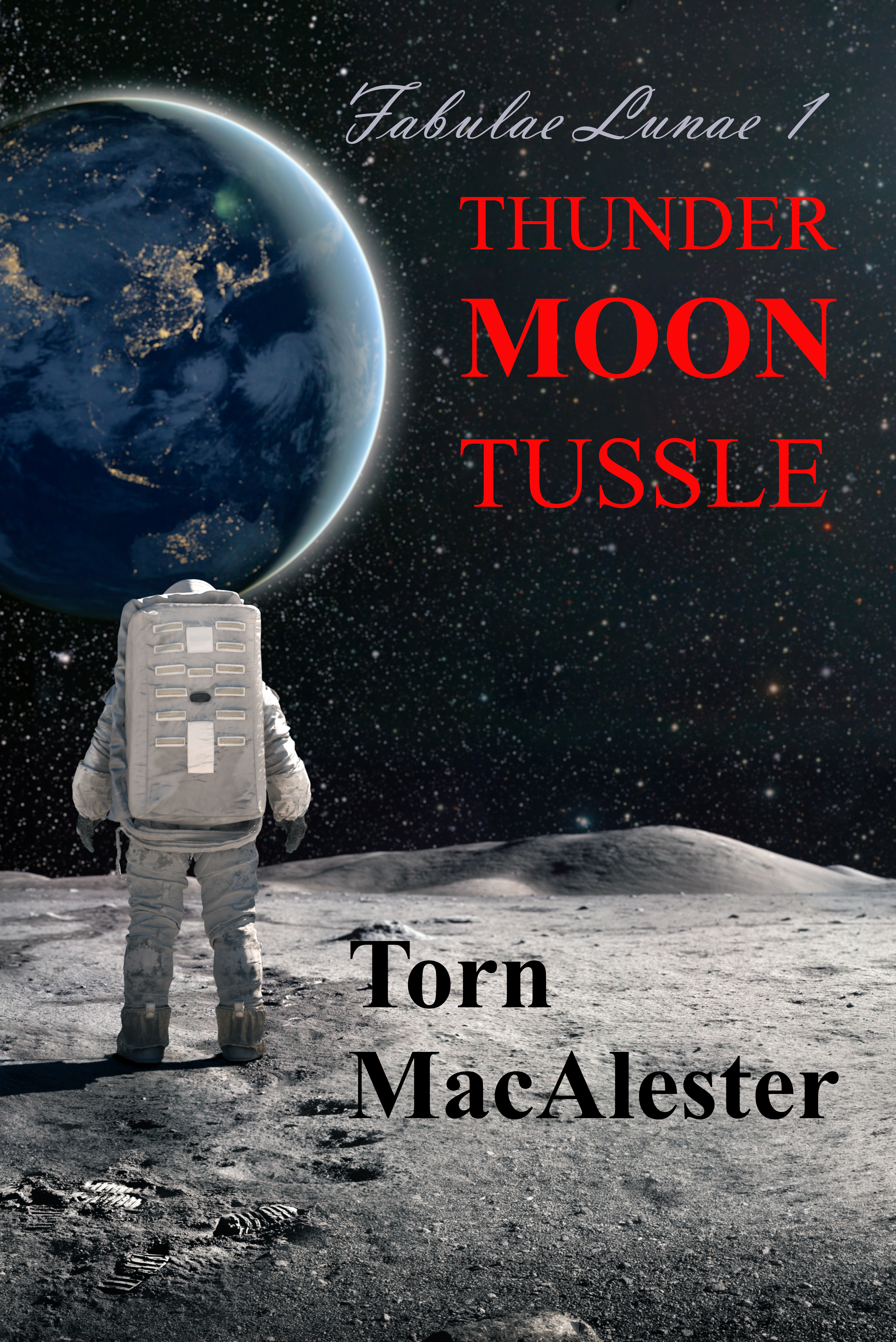
- Thunder Moon Tussle
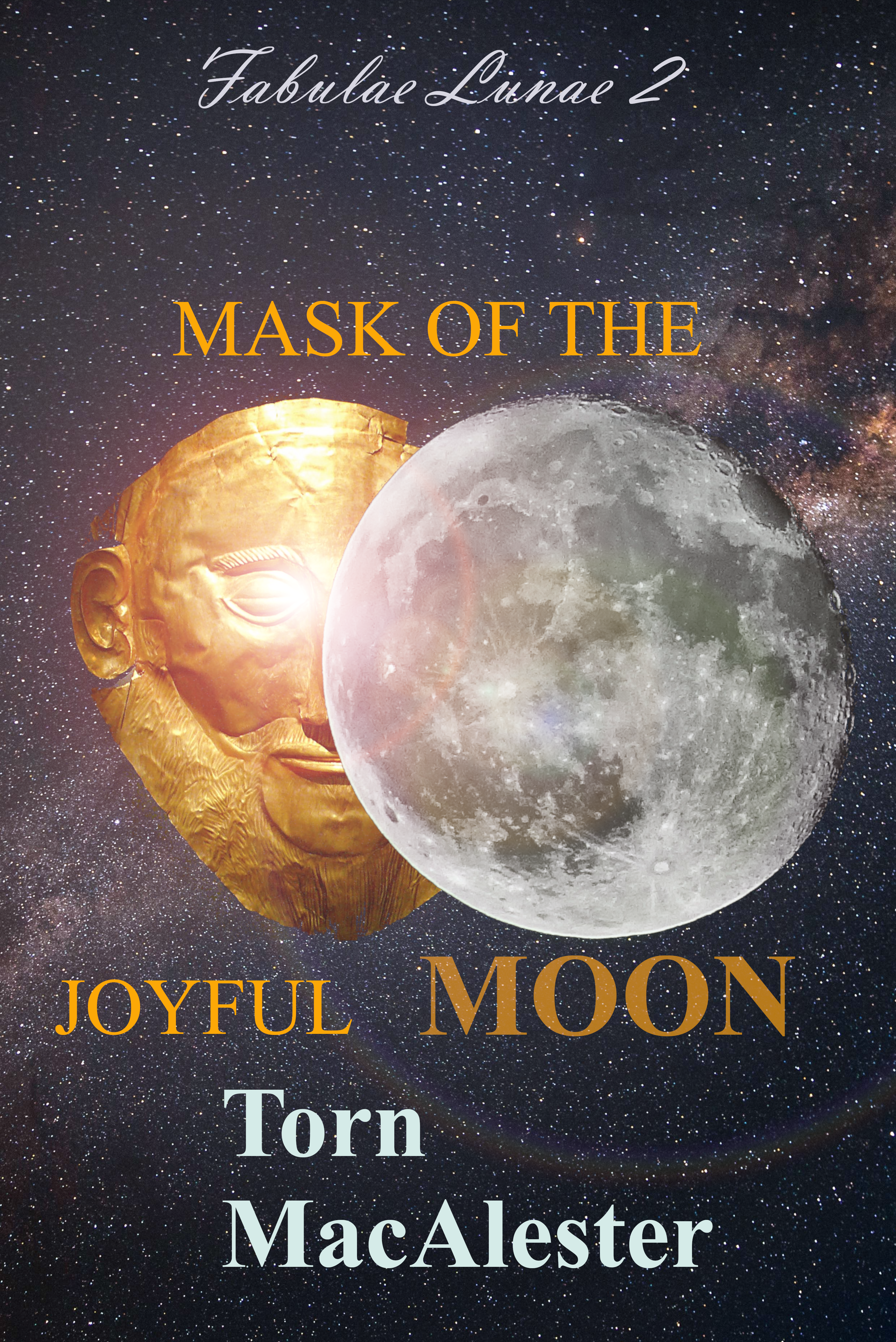
- Mask of the Joyful Moon
- Related site posts: Hard Tech & Science — Storm Cellar, Life on the Frontier — When the Alarm Sounds, Life on the Frontier — Solar Radiation, Hard Tech & Science — Retrieving the Rover
The Joyful Moon is still watching…
and the margins still have to hold.
— Torn MacAlester
Still riding the trails with Nils, Gen, and the whole Fabulae Lunae crew
🚀🌕
 |
 |
 |
|
StoriesThe stories of Torn MacAlester are science fiction, where the science is well-grounded. I intentionally made any deviations for speculative purposes. To maintain maximum realism, I restrict the scope of these deviations. |
ArticlesI write articles of science fact and science fiction. The articles here span the knowledge of modern science and the speculations of fiction. I try to caveat everything that is an assumption. You will find articles about spaceflight, the possibilities of alien contact, and descriptions of technology used in my stories. |