Life on the Frontier – Solar Radiation
Straw-cups down, eight minutes to the hatch, and who still stops for the radiation monitor.
Lunar noir hard science fiction: Justice is personal, and backup is three days away.
The alarm does not ask who is mid-story. It cuts Alex’s Bar in the middle of a tab, and the first honest sound after the blare is a lid. Straw-cups go down. Nobody finishes the yarn. Nobody settles. Sheriff Anderson does not explain a coronal mass ejection. He gives a hab, a cellar, and a clock: eight minutes, or your insides turn to jelly. Carmike, run to Hab C and grab Doc. The corridor after that is a sliding run in one-sixth gravity, because a bounce off a bulkhead knocks you out before you are under anything that counts.
The Practice
Solar radiation, on this day, is not weather. It is a direction and a deadline. Earth has already seen the ejection and sent the warning. The worst protons are still in transit. Eight minutes is the length of the decision, not the length of the storm. You do not pack a bag. The tab is not something you argue about. You get mass between your body and the Sun.
In a closed habitat, the practice is physical before it is procedural. Liquid does not stay in an open glass, so the cups already have lids. In one-sixth gravity a true run is a series of bounces, so the people who have done this before slide. Hab D is the one they built a berm of regolith up the sides, stacked most of the station’s water in the room above the cellar, and added foam for room. McPherson dogs the upper hatch and straps the blocks. The clock becomes the waiting time.
They acknowledge that anyone who remains outside experiences exposure after the radiation outside reaches over four thousand 100 MeV protons per square centimeter per second and keeps growing. Doc Keller’s monitor is the only instrument in the room that can say when the protons have actually arrived inside. Until it climbs, the shelter is a bet.
The floor does not save you. Since radiation can arrive from any side in space, they constructed the habitats with foam beneath the grating. Against a solar proton event, the particles are coming from one direction. Shielding under your boots cuts the slow crust dose. It does nothing unless it sits between you and the Sun. Nils has already used the cheaper versions of the same rule: a room under regolith in his own hab, a crawler driven into crater shade. Shade is not armor. It is geometry. The practice is the same sentence every time. Put mass in the line. Then wait for someone with an instrument to say the line held.
How People Use It
Nils buys the practice whole. He does not bounce. He does not stop for the tab. When Doc resists in the infirmary doorway, he goes down with her, then helps, because the monitor is the one thing worth the seconds. Later, in the cellar, he is the one who reaches for the floor grating. The foam under their feet is spare parts today. He wants it on a crawler, pointed at the Sun, so Doc can go after Tilly Masters without the cabin becoming the shield.
Doc refuses the panic version and accepts the scientific one. Let me up. I need my radiation monitor. She will not enter a cellar without the instrument that tells her whether anyone left outside is already dead. She is new. This is her first CME. She still knows which bag matters. When the reading climbs, she is the one who says it out loud: if someone isn’t in a shelter; they are dead. That sentence turns a missing name into a rescue.
Sheriff Anderson uses the voice. Location, time, consequence. He sends Nils for the doctor instead of going himself. Someone has to keep the room moving, and someone has to close the count. Twenty-five in the cellar. About thirty in the Ocean of Storms. Five names still out. He does not have a second speech.
McPherson accepts the hatch and refuses the floor. You’ll let the radiation in. He is not wrong to flinch. He is wrong about the direction. Once Nils says the particles are coming from the Sun, and the sheriff tells the room to let the man explain, McPherson gives the order to dig. The trust inside the cellar is that thin. It holds because someone will still say the geometry out loud.
Tilly does not get the bar version. She is southwest of a KREEP outcrop, off Conrad’s tower, running for shade at the base of a cliff. The prospector practice is the same rule with worse tools. Rock you cannot carry is still rock, if you reach it. The road is stones. Fifteen minutes instead of five. Those minutes are doses. Milton is in London. The alarm can still find him. A dish, a retransmit, four hundred thousand kilometers. Physical help cannot make the eight minutes. A voice can tell someone to get behind a mountain.
Tourists and corporate visitors do not have the same practices. They still want a proper glass. They would pack a bag for themselves. People usually think of a storm cellar as a hole you go down into, with down representing a direction the Sun acknowledges. It is really underneath that matters. Gen Miller is not in this room. She inherits the station later, with the same hatch, the same water, and a sheriff whose voice is no longer the clean instrument it is on this night. The practice does not retire because the badge gets complicated. It is older than her shift.
Fragile Trust
Official law, on this night, is a hangover and a count. Anderson can empty a bar with one sentence. He cannot make Tilly be in the net. He cannot make the floor foam face the sky. The cellar is unofficial in how matters: everyone is supposed to know, and five people are still missing when the detector climbs. Inside the room, the trust breaks when Nils shifts the grating. Two people shout. Doc cannot hear the phone. The sheriff has to buy the geometry back from the room before anyone will dig.
Backup is three days away. There is no Earth hospital in the eight minutes, and none in the three days after. A fabrication, a contract, a lander — none of them arrive faster than the protons. The repair, if it is a repair, is local: foam pulled out of a floor, a crawler pointed so the shield stays between the cabin and the Sun, a monitor in a bag, a detox panel for kidneys that are about to meet ionized tissue. Rule One is already in force before anyone says it on the south road. Survive. Don’t let each other die if you can help it.
The trust is provisional because the official chain is already a courtesy. As the sheriff takes on the roles of both the strike’s hero and the unreliable man for clearing the next room, the trust becomes increasingly provisional. Gen will have to keep the same hatch-and-monitor practice with a weaker voice above her. There will be no change in the protons. The lid still has to click. The hatch still has to be dogged. Someone still has to stop for the instrument, and someone still has to be wrong about the floor before the room will move.
Who is still outside when the monitor climbs, and who in the cellar is willing to dig up the only mass they can still carry?
Further Reading
The Lunadyne Incident and Other Stories — “CME”
Related site posts: Life on the Frontier — When the Alarm Sounds, Hard Tech & Science — Storm Cellar, Legends and Lore — Hab D, Character Spotlight — Doc Keller, The Three-Day Lag
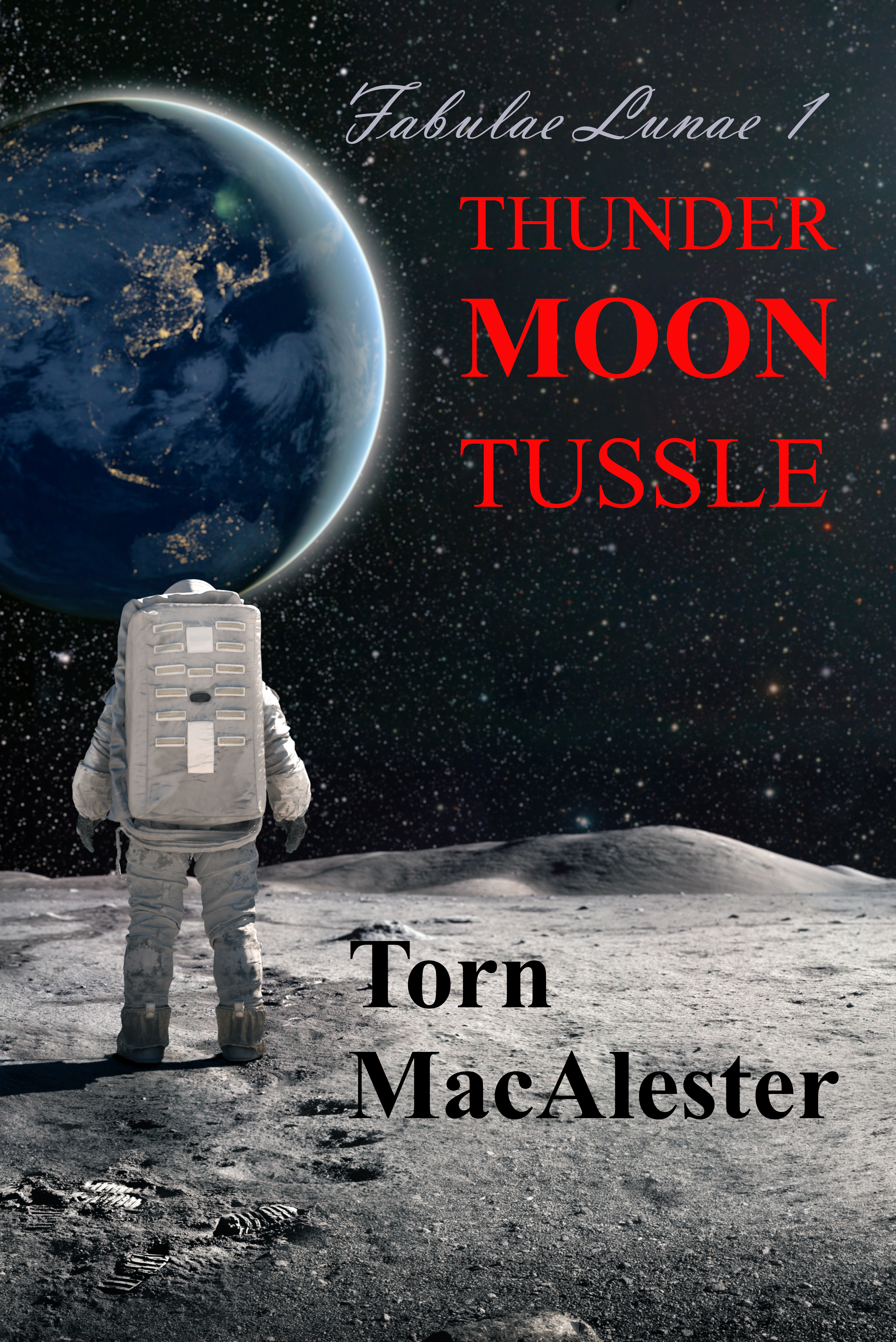
The Joyful Moon is still watching… and the lid still clicks. — Torn MacAlester Still riding the trails with Nils, Gen, and the whole Fabulae Lunae crew 🚀🌕
 |
 |
 |
|
StoriesThe stories of Torn MacAlester are science fiction, where the science is well-grounded. I intentionally made any deviations for speculative purposes. To maintain maximum realism, I restrict the scope of these deviations. |
ArticlesI write articles of science fact and science fiction. The articles here span the knowledge of modern science and the speculations of fiction. I try to caveat everything that is an assumption. You will find articles about spaceflight, the possibilities of alien contact, and descriptions of technology used in my stories. |