Hard Tech & Science — Doc’s Monitor
Hard Tech & Science – Doc’s Monitor
With the eight minutes running, Doc will not leave Hab C without the radiation monitor. That bag is what will say when the protons are actually in the room.
Moon base hard science fiction: air, water, power, and the narrow buffers that keep the Habs alive.
A radiation monitor is not a warning. The warning is the alarm and the eight-minute light-time. The monitor is the mass that tells you what is already arriving. Doc Keller will not leave Hab C without it. Nils has to go back for the bag. That bag is what will say when the protons are actually in the room, and how many there are. Mass, power, the seals on the cellar hatch, and the lag that means no one on Earth can read the same number in time to change what happens next.
The Constraint
The constraint is the flux. On the monitor, the number that matters is the count of 100 MeV protons per square centimeter per second. When it climbs past four thousand and keeps rising, the floor foam that was designed for omnidirectional space is already the wrong shield. Directional mass — water stacked overhead, regolith on the sides — is what the architecture has. The monitor is the only instrument in the room that can say whether that mass is enough, or whether the turns the crawler made have already put more of the stream through the cabin.
Earth habits get people killed by treating the alarm as the entire event. Here the forecast is eight minutes old when it arrives. The actual number is the one on the instrument that almost stayed in the infirmary. Without the bag, the cellar has water and foam and a hatch. It does not have a count.
How It Works at Conrad
The architecture is the cellar under Hab D, the water tanks stacked above it, and the radiation monitor that has to share the same hatch. Solar-plus-battery keeps the station running. Oxygen crackers and the recyclers keep the air. Seals keep the dust out of the joints. Crawlers carry people between habitats when the alarm has already sounded. None of those systems tell you the proton rate.
Doc keeps the monitor in Hab C. Nils slides the run from the bar to get her. She resists. She needs the bag. He loses balance, and they both go down. She hands him the bag and takes a second one. They make the cellar with a couple of minutes to spare. Later, on the South Road after Tilly, the same monitor is still running. It shows they have been getting a bit more rads than when they started. The turns have put them more toward the sun. Doc injects them both. The number decides the dose.
What Fails First
What fails first is the number that is not in the room. If the bag stays in Hab C, the cellar holds the water and the hatch with no instrument to determine whether the protons have already surpassed the threshold the architecture intended. Who notices is Doc. She is the one who will not leave without it. Nils notices the time. The eight minutes are already running out. The three-day lag means they cannot fly on a spare monitor. It is a gap in the only count that will be true while the stream is still arriving.
The monitor still has to make the hatch. Without it, the shelter is mass. With it, the shelter is a number someone can act on before the protons finish what the alarm only announced.
If the bag says the protons are in the room, what is the cellar actually for when the bag is still in Hab C?
Further Reading
- The Lunadyne Incident and Other Stories — “CME”
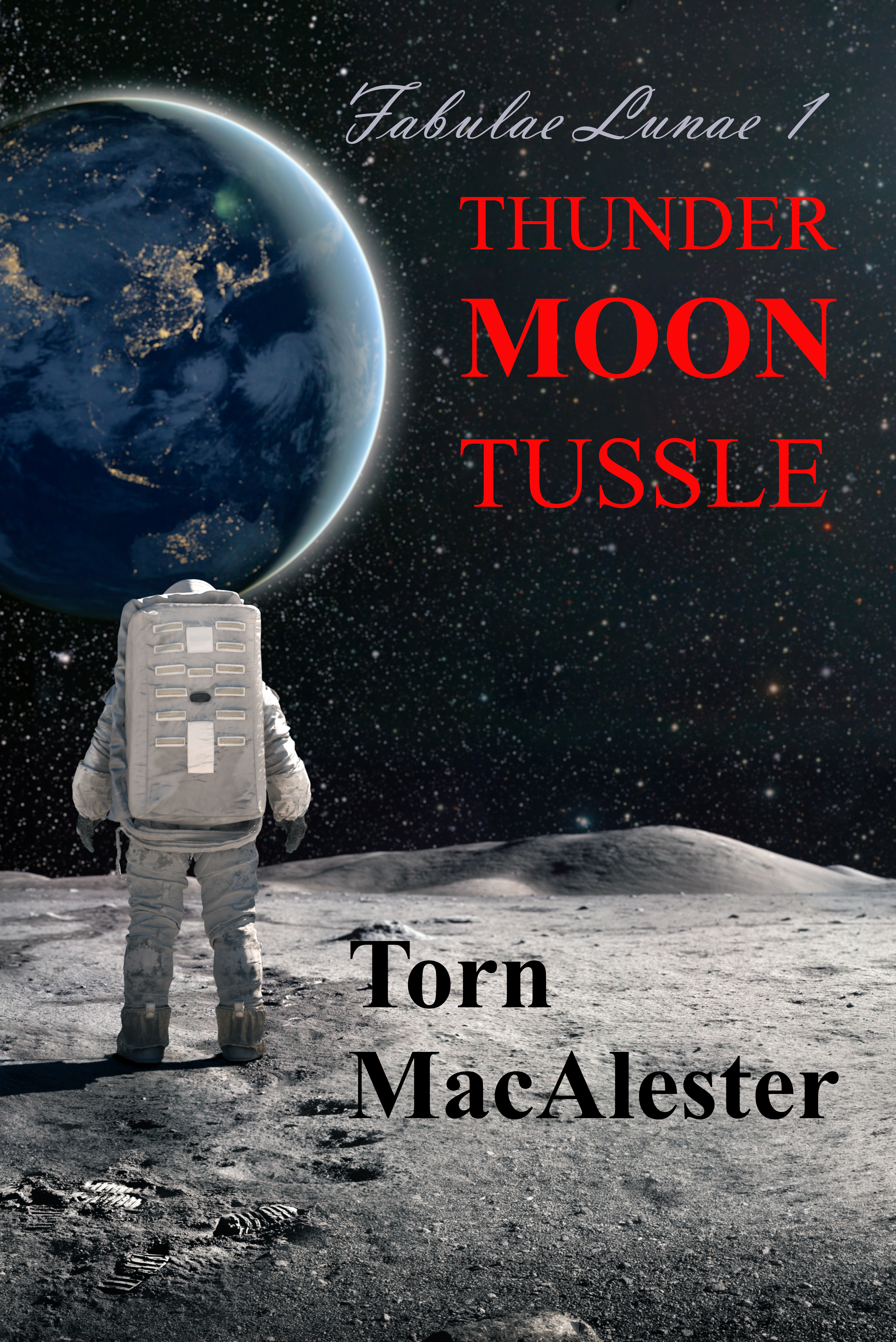
- Thunder Moon Tussle
- Mask of the Joyful Moon
- Related site posts: Hard Tech & Science — Eight Minutes, Hard Tech & Science — Storm Cellar, Life on the Frontier — Solar Radiation, Character Spotlight — Doc Keller
The Joyful Moon is still watching…
and the monitor still has to make the hatch.
— Torn MacAlester
Still riding the trails with Nils, Gen, and the whole Fabulae Lunae crew
🚀🌕
 |
 |
 |

StoriesThe stories of Torn MacAlester are science fiction, where the science is well-grounded. I intentionally made any deviations for speculative purposes. To maintain maximum realism, I restrict the scope of these deviations. |
ArticlesI write articles of science fact and science fiction. The articles here span the knowledge of modern science and the speculations of fiction. I try to caveat everything that is an assumption. You will find articles about spaceflight, the possibilities of alien contact, and descriptions of technology used in my stories. |