The story reveals how the builders built the original habitats and why they still creak today.
When people think of Conrad Station today, they picture a bustling frontier outpost with Alex’s Bar, crowded quarters, and the constant hum of life under the lunar surface. But it didn’t start that way.
The earliest known reference to the station’s founding comes from Year +17 (as mentioned in Chapter 54 of Thunder Moon Tussle). Conrad Station comprised just four pressurized habitats connected by rudimentary tunnels and airlocks. The setup was simple, functional, and built under harsh conditions with limited resources.
The Original Four Habitats
- Hab A — The social heart of the station. This is where Alex’s Bar was established early on. It quickly became the gathering place for prospectors, miners, and anyone looking for a straw-cup drink and a story after a long shift on the surface.
- Hab B — Primarily living quarters. This is where most of the early crew and later residents bunked. It was the first area focused on long-term habitation.
- Hab C — Likely served as storage, operations, or support systems (power, life support, and recycling). Details are sparse, but it was essential infrastructure.
- Hab D — The most mysterious of the original four. Nils Carmike was explicitly told to stay out of Hab D. Whatever was (or is) in there has remained off-limits or highly restricted since the beginning.
The Man in Charge
The lead figure during this foundational period appears to have been Avery Clarke. He oversaw the initial construction and early operations — a tough, practical leader trying to keep a small crew alive and productive on a world that offered almost no margin for error.
Why the Habitats Still Creak
The original habitats were built quickly with the technology and materials available at the time. They were designed for survival first, comfort second. Over the years, thermal cycling, micrometeorite impacts, regolith dust infiltration, and constant low-gravity stress have taken their toll. The “creaks” that residents hear today are not just signs of age — they’re reminders of the compromises made during those desperate first days when every seal, weld, and pressure door had to hold against the vacuum.
From those humble four habitats, Conrad Station has grown into the frontier hub we know today. But the spirit of those early days — resourcefulness, caution, and a healthy respect for the Moon’s unforgiving nature — still runs through every corridor.
Further Reading
- The Lunadyne Incident — Early corporate intrigue and the first cracks in the station’s fragile peace.
- Thunder Moon Tussle — Nils Carmike’s stories from Alex’s Bar and life in the original habitats.
- Mask of the Joyful Moon — How the station’s early foundations continue to shape today’s conflicts.
Would you like me to expand any section, add images prompts, or adjust the tone?
Ready to begin the journey? Here’s the recommended reading order:
• The Lunadyne Incident — where it all began → Amazon
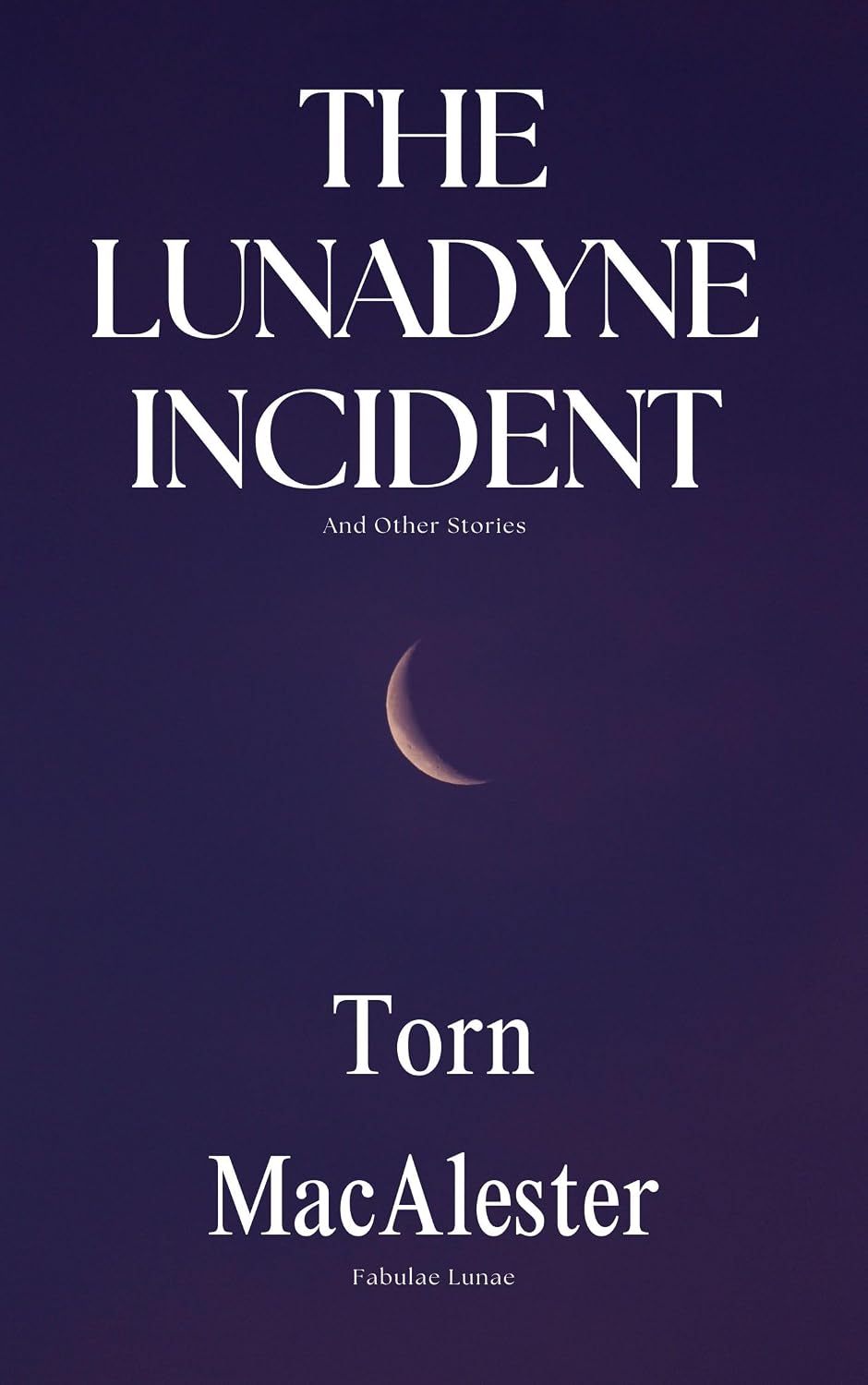
• Thunder Moon Tussle — Nils Carmike’s tales from Alex’s bar → Amazon
Then step into Gen Miller’s boots with Mask of the Joyful Moon: https://www.amazon.com/dp/B0G16F7MQW

The Joyful Moon is still watching… and the long lunar night deepens.
— Torn MacAlester Still riding the trails with Nils, Gen, and the whole Fabulae Lunae crew 🚀🌕
Mask of the Joyful Moon Trailer
Stories
The stories of Torn MacAlester are science fiction, where the science is well-grounded. I intentionally made any deviations for speculative purposes. To maintain maximum realism, I restrict the scope of these deviations.
Articles
I write articles of science fact and science fiction. The articles here span the knowledge of modern science and the speculations of fiction. I try to caveat everything that is an assumption. You will find articles about spaceflight, the possibilities of alien contact, and descriptions of technology used in my stories.