Frontier Foundations — Trash Can Experiments
Frontier Foundations – Trash Can Experiments
How getting the trash cans set up eats precious time
Moon base hard science fiction: air, water, power, and the narrow buffers that keep the Habs alive.
From the reader’s vantage across the Fabulae Lunae, oxygen always arrives as a promise before it arrives as air. Heat the rock. Crack the oxides. Call it in-situ resource utilization and put a green light on it. Sixty years before Annie MacInturner stood a garbage can upright at Fra Mauro, the teams had already identified and dismissed the water-vapor spikes on the Apollo instruments as contamination brought by the crews and hardware. Both explanations felt inevitable. Under Conrad Station’s boots, the inevitable part is the clock. A prototype that was supposed to buy two weeks of breath in one week of sunlight first had to be unloaded, balanced, aimed, and believed by two people whose EVA was already late.
The Detection / The First Lesson
The Suprathermal Ion Detector Experiment at the Apollo 14 ALSEP site did not record a single odd hour and then go quiet. Milt Johnson has the reports. The signature came back a few weeks later. That second pass convinced the people reading the tapes that the water had come from something left behind — a model of seismic activity outgassing groundwater, written up at the time, tidy enough to close the folder. Annie hears it and agrees. Something left on the surface could have made the signature. It makes sense.
It makes sense because the Moon had already taught everyone to distrust a water line. Suits outgas. Descent stages outgas. A fresh experiment outgasses. Fra Mauro is not special until someone checks the other sites and cannot find the same detection on the other packages. Milt’s case, the one that earns him the seat, is that small: either Apollo 14 left it, or the region did. The answer is only at Fra Mauro. An early moonquake on the surface seismographs sits in the same folder. Later, before the flight, Nils will say the quiet part in the room — ice in the skylight under Cone, sunlight warming it just enough for a slight outgassing of water vapor, and the SIDE close enough to taste it. Annie does not need that speech to feel the first lesson. The official explanation was not a cover. It was the explanation a careful person would have written. Careful is how a real signal gets parked next to the trash.
The Local Problem
EVA one at Fra Mauro is not the SIDE and not the golf ball. It is the experiment cans.
They come off a six-wheeled crawler in fifty-gallon-drum packages, the same size a reader can picture in a shop and the wrong size for one-sixth gravity. Training had the setup in three or four hours. Annie and Milt start the work at hour five. She takes the soil-mineralogy can because it is hers to take, and it knocks her off her feet. On the Moon, it weighs thirty pounds. The mass is another matter — close to her own, top-heavy, off-center, carrying inertia the simulator never quite built into the training article. She will not hand it to the rookie. She tells Cy, Capcom and her husband, to have the experiment design team make a note: hardware this close to a suited body’s mass is a bad idea. He offers to have them shined up. She shoves the can upright, anyway.
Putting the can upright is not the experiment. It is necessary to take out the antenna. The solar array has to come out. To break oxygen out of the rock, the chamber needs to be ready to draw in lunar soil and use sunlight. The design point is blunt enough to budget against: one week of operation, a two-week supply of oxygen, the first honest prototype of air that does not have to ride up from Earth with the crew. They are leaving hardware the way Shepard and Mitchell left hardware sixty years earlier, except these cans are supposed to breathe, and they run on solar power and newer electronics instead of the old radioisotope quiet.
Tango-Charlie-Six gives her a green light. That is not telemetry. Telemetry is Cy, after the two-second speed-of-light delay, reading a link that has to hop. TC1 sits a dozen meters off with its antenna unfurled toward Earth. TC6 has to find TC1 over a local Wi-Fi before Earth ever sees the chamber. If that hop fails, she reboots the can and spends more of the hour. Antares is fifteen hundred meters south on a rise, gold foil giving the descent stage away. Steamboat, their own lander, sits some thirteen hundred meters from that relic. The historic site is in sight the whole time they are teaching a trash can to make air. Every minute on the array is a minute not on the SIDE, not on the rim of Cone, not back inside the crawler with the suit still holding margin. The green light does not give the hour back.
Highland ground is not a generous rare earth deposit. Fra Mauro is ejecta and breccia, not a mare basalt bench where the iron oxides look friendly on a chart. The can does not get to pick a better pit. It gets the soil under Annie’s boots, sunlight, and a week. If the prototype cannot do the job here, the later stations do not get to pretend the chemistry was the straightforward part.
What Still Follows
Conrad Station does not run on a green light from Fra Mauro. The habs — the early, incomplete cluster, modules scarred and patched, power still an argument — live on buffers. Air. Water. The watt that keeps a processor hot enough to matter. A can that needed an hour of EVA to stand up is the ancestor of every extractor a prospector will later swear is about to pay off. The same regolith still has to be moved, heated, and trusted before anyone stakes a claim or sells Lunadyne a margin. Water remains the other half of the folder Milt would not let close: detected, dismissed, possibly waiting in a cold trap, definitely wanted by anyone who would rather not fly it from Earth.
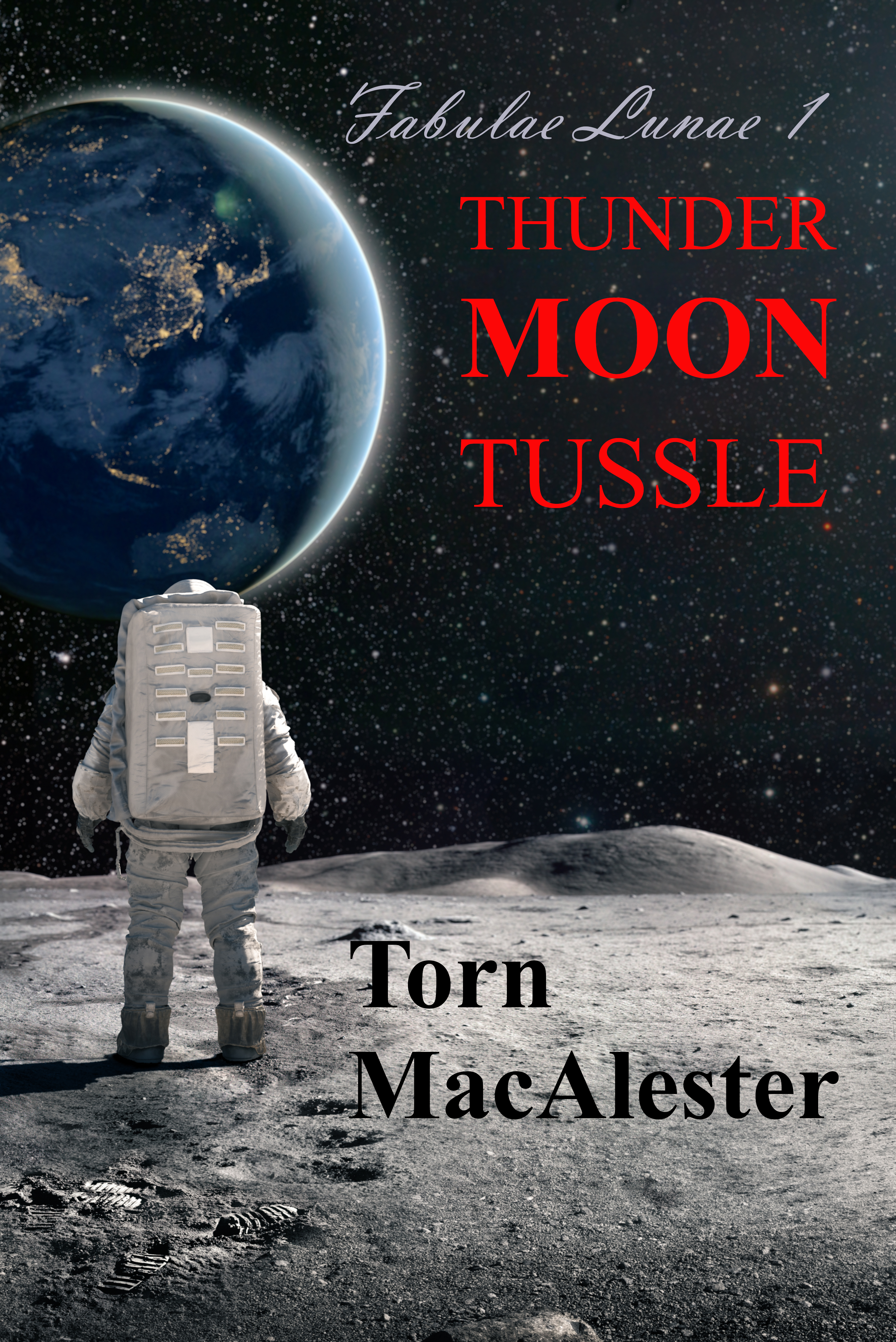
The three-day lag is the part the prototype never had to face. Cy could answer in two seconds. A failed processor under Conrad is not a capcom call. Earth is three days out, and the tanks do not care that a design review once promised two weeks of oxygen for a week of sun. Milt, who helped stand the cans and who talked Annie into Fra Mauro with a missing detection, later walks those trails with Nils Carmike. The partnership in Thunder Moon Tussle carries the argument with it — what the SIDE actually saw, what a chamber can pull out of highland soil, what you do when the hour is already gone and the light is still the only proof. Years later, Gen Miller manages the station that those cans enabled. She does not inherit the hour.
They got the trash cans set out. They called it a day. The day was shorter than the flight plan, and the air was still a promise sitting in a drum with an antenna pointed at Earth.
If a week of sunlight was the price of two weeks of breath at Fra Mauro, what is actually in Conrad’s tanks when the Sun goes down?
Further Reading
- The Lunadyne Incident and Other Stories — “Golf and Outgassing”
- Thunder Moon Tussle
- Mask of the Joyful Moon
- Related site posts: Frontier Foundations — The Landing at Fra Mauro, The Water Economy, EVA Reality, The Three-Day Lag, Frontier Foundations — Dark Craters
The Joyful Moon is still watching…
and some shadows still hold water.
— Torn MacAlester
Still riding the trails with Nils, Gen, and the whole Fabulae Lunae crew
 |
 |
 |
|
StoriesThe stories of Torn MacAlester are science fiction, where the science is well-grounded. I intentionally made any deviations for speculative purposes. To maintain maximum realism, I restrict the scope of these deviations. |
ArticlesI write articles of science fact and science fiction. The articles here span the knowledge of modern science and the speculations of fiction. I try to caveat everything that is an assumption. You will find articles about spaceflight, the possibilities of alien contact, and descriptions of technology used in my stories. |