Hard Tech & Science – Eight Minutes
A CME alarm, a cellar under Hab D, and the water stacked over your head while 100 MeV protons arrive.
Moon base hard science fiction: air, water, power, and the narrow buffers that keep the Habs alive.
Light from the Sun has already spent eight minutes and twenty seconds crossing the gap. That pulse is the alarm. The protons that will do the damage are slower than the photons and faster than any crawler. A $100\,\mathrm{MeV}$ proton travels at about $0.43c$; if it left with the flare, it is still minutes behind the warning. There is no magnetosphere to peel it off. There is no ambulance. Mass between you and the sky is the only number that matters, and the mass you already paid to ship or crack is sitting in tanks. Earth habits get people killed: finishing the drink, going back for a bag, treating the tone like weather you can watch from a porch, assuming the next room is close enough.
The Constraint
A solar particle event is not weather. It is a fluence of protons and heavier ions whose useful warning is the electromagnetic flash, not the cloud. At Conrad the official clock is eight minutes from alarm to the Hab D hatch. That is not the particle transit time. That is the time a body in one-sixth $g$ can cover the station without bouncing a skull off a bulkhead, dog a hatch, and get under stored water. A $100\,\mathrm{MeV}$ proton has a CSDA range in water of about $7.6\,\mathrm{g\,cm^{-2}}$ — a few centimeters of liquid if the spectrum stopped there. It does not. The hard tail runs higher. A working storm shelter wants tens of grams per square centimeter of water-equivalent between the Sun and bone marrow. Regolith on the original habs supplies some of that. The rest is inventory: the station’s water, parked where it does the most good when the detector climbs. You do not “ride it out” in Alex’s. You do not stand in Earthlight and look up. You do not spend an EVA you cannot take back. Backup is three days. Physical help cannot make the eight minutes.
How It Works at Conrad
Power is solar-plus-battery. Night is two weeks; a storm does not care which half of the month you are in. Oxygen is cracked and looped. Recyclers pull; they do not pour. Air, water, condensate, and the oxygen side of the plant share a sound in the bulkheads. Hab D is one of the original four cylinders Avery Clarke pressurized at founding. The early station piled regolith up the sides until that hab was effectively underground. Most of the station’s water lives in the room above the cellar. Water and foam between the Sun and the people. That is not a metaphor. It is stack height. Hab C holds support and the infirmary kit. Hab A is the social core — Alex’s Bar, straw-cups, the worst room on the map when the Sun throws a coronal mass ejection at you. Crawlers are outside the architecture. A prospector southwest of a KREEP outcrop is not in the eight-minute problem. She is in a twenty-minute problem with crater shade and whatever mass her chassis already has. The net either has her or it does not. McPherson dogs the hatch. Sheriff Anderson gives a location and a clock. Nils runs Hab C for Doc. The unofficial protocol is that everyone is supposed to know the cellar. Five people are still missing when the detector climbs.
What Fails First
People fail first. The recyclers keep humming. The tanks do not empty because a flare hit. The person still on the trail is already outside the design. Tilly Masters does not hear the bar. She sees rad sensors go wrong and runs for shade. Twenty minutes. Far too long. Next is the doorway: Doc will not enter without the radiation monitor. Nils takes the fall because arguing costs more minutes than the kit. That monitor is how you learn whether anyone left outside is already a dose problem you cannot send to Earth. Then the hatch. Then the wait. The clock becomes waiting. Radiation medicine is what someone carried down the ladder, not a hospital protocol. Three days of lag means Earth can confirm the event, argue about class, and tell you what you already measured. They cannot put a surgeon in the cellar. They cannot swap a failed pump if the storm has the surface locked. They cannot retrieve the crawler that did not make shade. The station lives on the water already stacked over the shelter and on the people who put the cup down before the tab was settled.
Rule One is the same sentence with the physics left in: survive the minutes you have, under the mass you already own.
Further reading
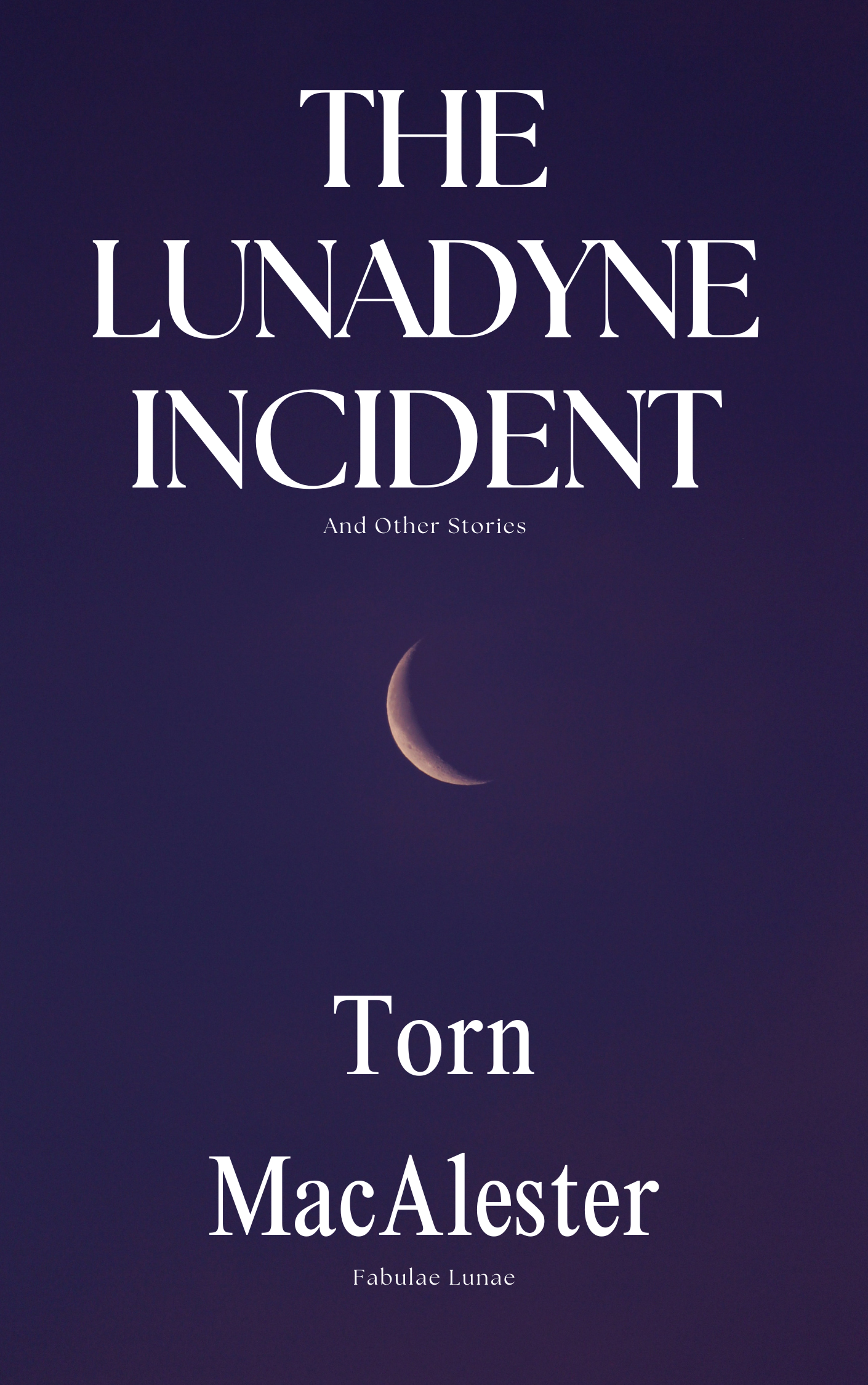
The Lunadyne Incident and Other Stories — “CME”
Life on the Frontier – When the Alarm Sounds
The Sound of the Recyclers
Legends and Lore – Hab D
Character Spotlight – Nils Carmike (Revisited)
The Joyful Moon is still watching…
and the hatch still has to dog.
— Torn MacAlester
Still riding the trails with Nils, Gen, and the whole Fabulae Lunae crew
Further Reading
- The Lunadyne Incident and Other Stories
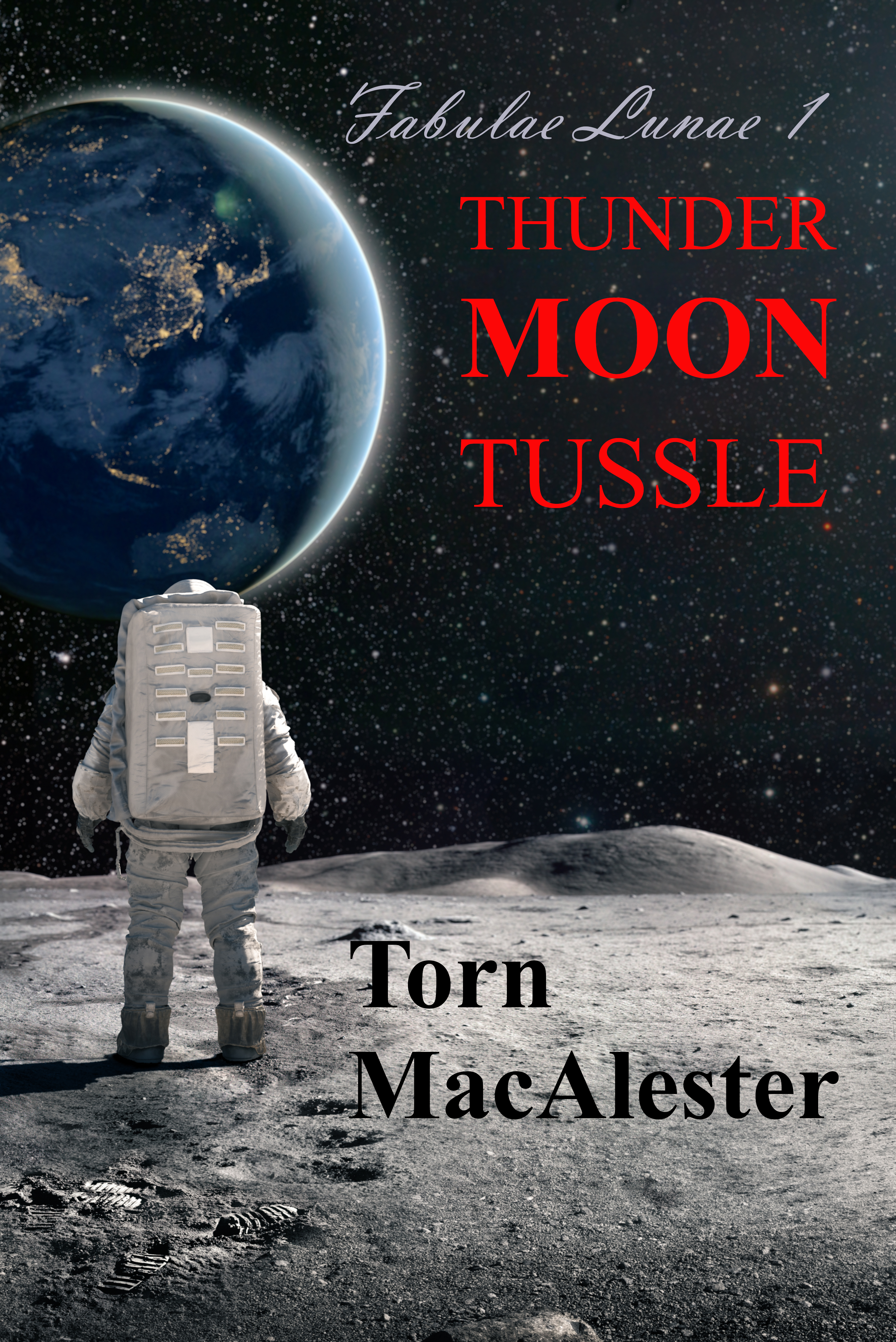
- Thunder Moon Tussle
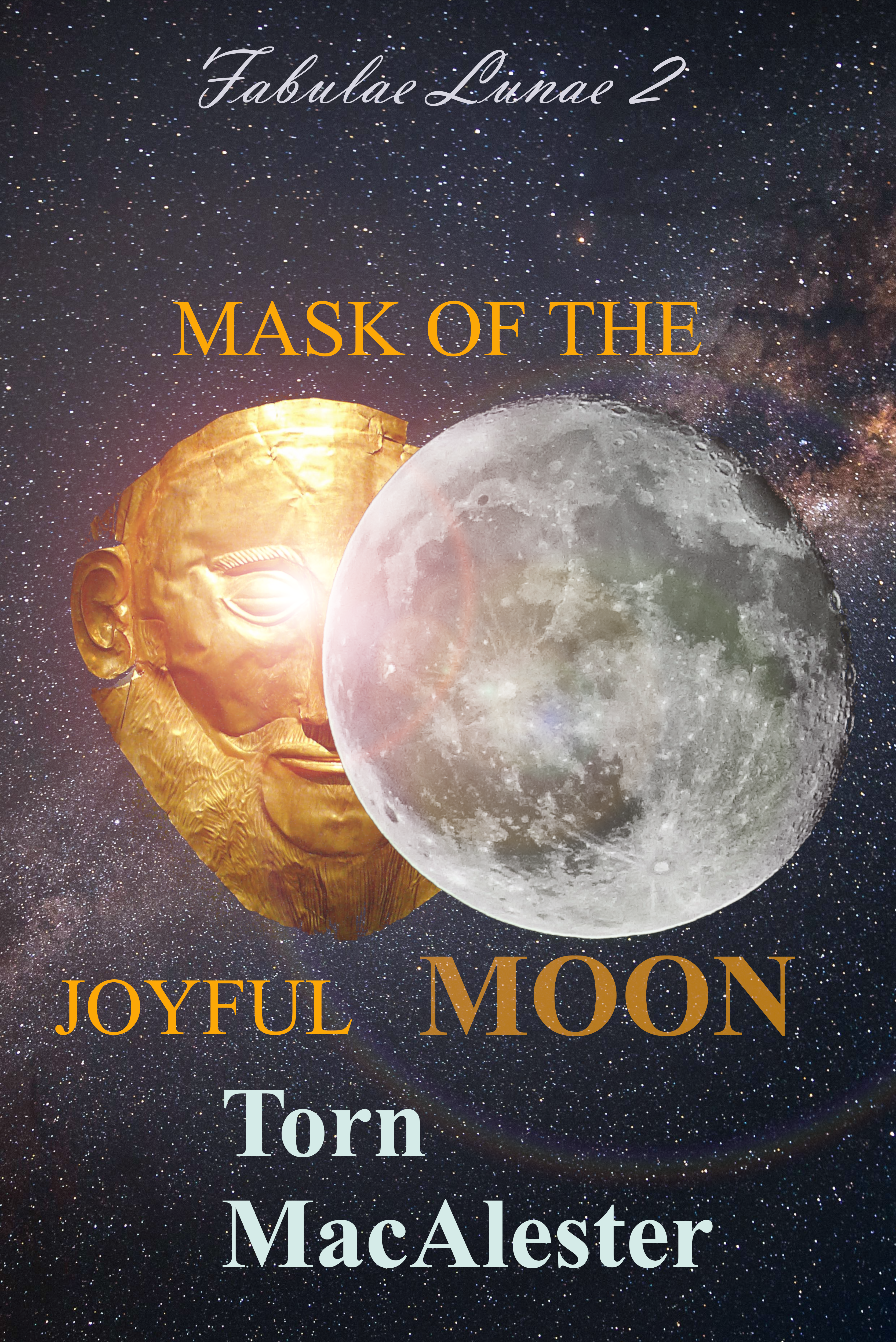
- Mask of the Joyful Moon
- Related site posts:
The Joyful Moon is still watching…
and the margins still have to hold.
— Torn MacAlester
Still riding the trails with Nils, Gen, and the whole Fabulae Lunae crew
🚀🌕
 |
 |
 |
StoriesThe stories of Torn MacAlester are science fiction, where the science is well-grounded. I intentionally made any deviations for speculative purposes. To maintain maximum realism, I restrict the scope of these deviations. |
ArticlesI write articles of science fact and science fiction. The articles here span the knowledge of modern science and the speculations of fiction. I try to caveat everything that is an assumption. You will find articles about spaceflight, the possibilities of alien contact, and descriptions of technology used in my stories. |