0. Prologue
This is the extended version of this article. The lighter version that is intended for the casual reader is available at:
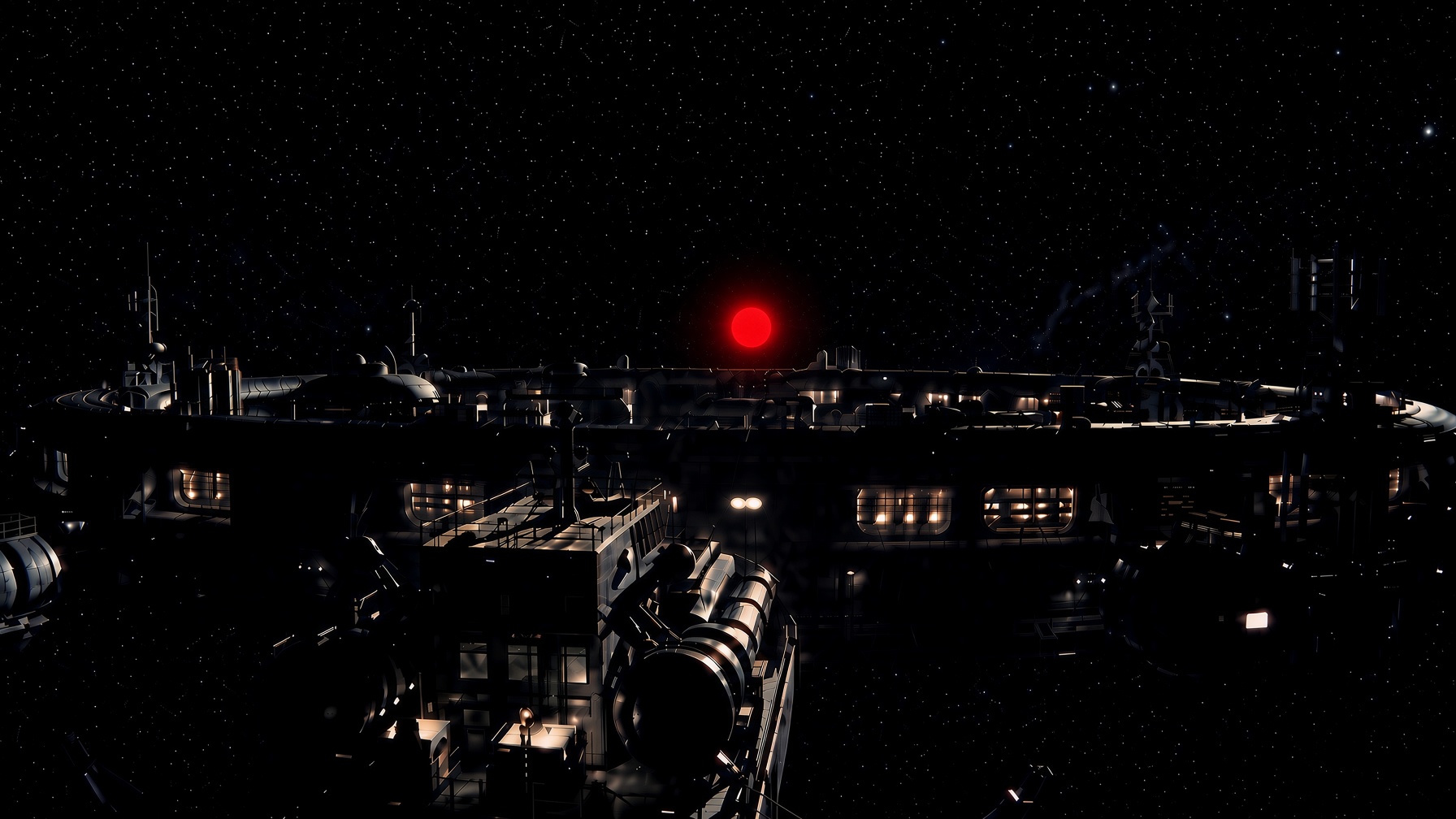
This article may be overwealming to some, but I wanted to lay out the worldbuilding idea of being able to goto another star without having to somehow resovle relativistic speeds, or some other extremely difficult technology. A lot of people conclude, going to the stars is impossible. From my perspective, it is not impossible. I wanted to provide a means to do it. The constraint of within a human lifetime was not placed on this. Nor did I want the agency of later generations being stuck to do what crazy grandpa wanted to do. I leave it to you, dear reader, to evaluate the possiblilities.
1. Introduction
For generations, a lack of imagination has held the dream of reaching another star as forever impossible due to two unforgiving realities: sheer distance and the vast span of time any realistic voyage would require. Proxima Centauri, the nearest known star to our Sun, still sits roughly 4.25 light-years away—about forty trillion kilometers. Even at speeds that are ambitious by today’s engineering standards but still well below the speed of light, a continuous voyage straight to that destination would last centuries. Along the way, a single, highly complex craft would have to keep its power systems, life support or automation, navigation, and propulsion working without catastrophic failure for the entire duration. There would be no friendly ports, no spare parts from home, and little margin for the unexpected.
Consider a different approach. Instead of treating the gulf as one unbroken leap that someone must clear in a single ship’s lifetime, view the 4.25-light-year expanse as a transportation corridor: a route that people can open, stock, and improve. Relay stations, supply caches, or successive generations of vehicles could turn an impossible one-shot mission into a managed infrastructure project—one that spreads risk, shortens individual legs of the journey, and lets each generation of hardware build on the last rather than stake everything on a lone craft that must never fail.
2. The Core Concept
Build a string of permanent stations along the route from the Solar System to Proxima Centauri. Split the overall trip into fifty successive legs of roughly five years apiece, so that the chain forms a continuous highway of waypoints rather than a single unbroken voyage. At a distance of about 4.24 light-years, the average spacing between stations would be on the order of a few light-weeks—close enough that ships can complete each hop in a manageable span, yet far enough that the full route remains a true interstellar artery rather than a dense local network. Ships designed for this purpose travel only between adjacent stations, reversing their course or transferring cargo and passengers at every stop. That specialization matters: a ferry need only carry fuel, shielding, and life-support for a few years of flight, not a sealed biosphere and a society that must sustain itself for generations. The systems can tune propulsion for repeated boost-and-brake cycles between fixed endpoints. Known thermal and radiation loads allow the sizing of the hulls and radiators. You can stock spare parts at both terminals of each segment instead of carrying them for an entire expedition.
End-to-end travel still takes about two hundred fifty years, yet no single ship or crew has to remain in transit for the full span. After one or two legs, crews rotate to their home station, where they can maintain and upgrade systems. They only need to replace failed craft on their local segment. A mechanical failure, medical emergency, or supply shortfall becomes a problem for one hop rather than a crisis for an entire fleet. Passengers and cargo change vessels at each station, just as travelers once changed trains at rail junctions. Outbound and inbound traffic can share the same infrastructure. Removing a damaged ferry for overhaul does not strand everyone further along the route. Stations themselves can store reaction mass, process ices and dust harvested from the interstellar medium or from planned resupply caches, and host machine shops capable of fabricating replacement components that would be impractical to carry aboard every ship.
Over time the stations become the true infrastructure of interstellar travel—fuel depots, repair yards, habitats, and transfer hubs—while the ferries remain interchangeable links in a durable chain from Earth to our nearest stellar neighbor. Habitable modules at the stations can support permanent or long-term crews who manage logistics, perform inspections, and coordinate schedules; scientific outposts can study the local radiation environment, dust density, and magnetic fields along the path; and later generations can upgrade the chain in place, adding better shielding, more efficient engines, or higher-capacity docks without rebuilding the entire corridor from scratch. Instead of a single heroic voyage, the result is a maintained highway. While a traveler might take longer to reach their destination in calendar time than with a one-shot starship, the investment in permanent waypoints makes it far more resilient, expandable, and economical.
Each station becomes a settlement in its own right: not a mere waypoint or outpost of some distant capital, but a living community with its own rhythms, needs, and ambitions. Those who inhabit it hold the authority to decide their own future—how they work, how they govern, what they build, and which risks they accept. No higher power dictates the course of their lives from afar. Whether people migrate outward into the open frontier or inward toward denser, more established hubs makes no difference; the principle remains the same. Freedom of movement does not diminish local self-rule, and self-rule does not depend on where a station sits on the map. Every settlement, wherever it stands, is a place where people shape their own destiny.
As a result, we get a string of permanent stations that would stretch the 4.24 light-years from the Solar System to Proxima Centauri across roughly fifty stages of about five years each, set a few light-weeks apart. Specially built ferries would travel only between adjacent stops, carrying fuel and life support for brief hops instead of multi-century journeys. End-to-end travel would still last about 250 years, though crews would rotate after one or two legs, cargo handlers would pass off cargo at every station, and localized failures would remain local. Stations would store reaction mass, service vessels, house crews and research outposts, and develop into self-governing communities. The outcome is a durable, upgradable interstellar highway rather than one solitary heroic voyage.
3. Key Parameters at a Glance
Distance to Proxima Centauri is 4.2465 light-years, or roughly 40 trillion kilometers—far enough that a single continuous radio or laser link would suffer extreme free-space loss, long light-time delays, and no practical way to repair or re-point a mid-course failure. The article estimates the distance between stations at approximately 0.085 light-years (about 5,370 AU, or roughly 800 billion kilometers) across 50 hops. That spacing is still enormous by solar-system standards—more than a hundred times the Sun–Pluto distance—but it breaks the journey into segments that a high-gain optical or radio terminal can close with manageable aperture sizes, power budgets, and pointing accuracy. The probe travels at an average cruise speed of ~0.017c (about 5,100 km/s). This speed means the probe takes about five years to cover one hop. Deploying the full chain, therefore, requires a multi-decade campaign instead of a single flyby. Light itself takes only about 31 days to travel between neighboring stations—short enough for practical two-way coordination, ranging, clock synchronization, and telemetry handoff without the multi-year round trips that would dominate an end-to-end link. The resulting network has 51 nodes: a Solar System hub, 49 intermediate stations, and a Proxima terminal, forming a continuous relay chain that can store, retransmit, and route data so no single link has to span the full interstellar gap. Intermediate nodes act as store-and-forward buffers, error-correcting re-transmitters, and alternate routing points: if one hop degrades from dust, misalignment, or hardware fault, traffic can wait, retransmit on a cleaner path, or jump to a redundant neighbor. Over time, the chain becomes not merely a pipeline for science data from the Proxima system, but a navigational and communications backbone for later probes, crewed missions, and any permanent presence at the destination.
4. Why Segment the Journey?
Segmentation dramatically reduces how much reliability and life support any single ship must carry on its own. In a pure point-to-point mission, every vessel has to function as a self-contained world for the full duration of the voyage: enough power generation and thermal control for years, redundant life-support loops, medical facilities sized for rare but catastrophic events, spare parts for every critical system, and enough consumables and contingency mass to absorb long delays. Intermediate stations break that requirement into manageable segments. Each station can host shared power, workshops, medical bays, spare-parts depots, and emergency berthing, so the fleet carries the burden of long-duration safety while individual ships only need enough capacity for one leg plus a modest reserve.
That architecture lets designers size each vessel for a few years of transit rather than for centuries of total isolation. Designers can match propulsion, radiation shielding, crew volume, and consumables to the shorter duty cycle instead of the worst-case total isolation. The result is lower mass, lower cost, and lower engineering risk on every ship, because critical systems no longer have to meet extreme multi-century reliability targets in a single package. The chain of stations preserves a path home: if one stage fails, a crew can abort to the nearest station, wait for repairs or a relief vehicle, and continue or return without depending on a single ship remaining fully operational for the entire journey.
Each node enables routine inspection, repair, refueling, and crew rotation at every station along the route. Instead of treating each voyage as a one-shot endurance run, crews can pause in a controlled environment to swap out worn or degraded components—thermal radiators, power-system modules, life-support filters, and other high-wear hardware—before failures cascade into emergencies. Topping up propellant tanks from station stores enables vehicles to leave with full delta‑v budgets rather than stretching margins on residual fuel. The station crew can restock consumables like water, oxygen, food, medical supplies, and spare parts on a predictable schedule. Personnel can hand over to fresh crews without waiting for a full Earth-to-destination round-trip, which shortens individual tour lengths, limits cumulative radiation and isolation exposure, and keeps skills and decision-making sharper. Regular stopovers convert deep-space travel from a rare, high-stakes endurance test into scheduled operations with defined maintenance windows, spare-parts logistics, and crew-rotation cycles—more like airline turnarounds than polar expeditions.
This lets the system expand step by step instead of depending on one massive generation ship from the start. Early stations can be modest—crewed habitats, fuel depots, or assembly yards—and you can build them close enough to resupply and prove them in place before adding later links farther out. Each successful stage funds and validates the next: lessons from living systems, docking, power, and logistics feed the design of the following node, and revenue or political capital from a working stage underwrites the next build. That staged approach avoids the all-or-nothing gamble of launching a single, enormous vessel that must work perfectly for decades, with no intermediate proof that the architecture, life support, or propulsion can endure.
Builds reusable transport infrastructure rather than a string of one-off missions. The company treats ships, docks, propellant depots, and supply chains as lasting assets. They refurbish, restock, and reassign these assets across many crews and many years, rather than discarding hardware after a single voyage. That reuse amortizes the high fixed cost of design, testing, and production over repeated flights; shortens turnaround by enabling standardized maintenance, refueling, and crew transfer instead of building a new vehicle each time; and creates a durable logistics backbone. Over time, that backbone supports not only exploration sorties but continuous cargo and personnel flow, lowering the marginal cost of each subsequent mission and making permanent presence and settlement economically and operationally realistic.
This architecture supports ongoing scientific return and technology validation while construction is still underway, rather than waiting for every station, vehicle, and logistics link to be finished before useful work begins. Early outposts and partial infrastructure can already host research instruments, collect and return samples, and run crew experiments and technology demonstrations under actual flight conditions. That early operational cadence matters: data from sensors, system performance, crew procedures, and logistics under actual mission stress feed directly back into design upgrades, operations concepts, and reliability improvements. Later stages of the architecture therefore improve from flight-proven lessons—what worked, what failed, and what needed redesign—rather than relying only on ground tests, simulations, and preflight analysis. This phased approach shortens the gap between first deployment and scientific and commercial value, de-risks subsequent hardware through continuous learning, and keeps the program producing measurable results throughout the long build-out of the full transportation and surface chain.
Intermediate stations cut what each ship must carry alone. Instead of years of self-contained power, life support, spares, and consumables, vessels only need capacity for one leg plus a modest reserve, while stations share power, workshops, medical care, depots, and emergency berthing. That lowers mass, cost, and multi-year reliability risk, and gives crews a nearby abort path if a stage fails.
Stations also enable routine inspection, repair, refueling, and crew rotation. The crew can swap-out worn hardware before it fails; deep-space travel becomes scheduled operations with maintenance windows rather than one-shot endurance runs.
The network can grow stage by stage: modest early nodes prove living systems, docking, power, and logistics before people add farther links, avoiding an all-or-nothing generation ship. Reusable ships, docks, depots, and supply chains amortize fixed costs across many flights and create a lasting logistics backbone for cargo, personnel, and eventual settlement. Early outposts already support science, sample return, and flight-proven technology demos, so later stages improve from actual operations rather than only ground tests, and the program delivers value throughout the build-out.
5. High-Level System Architecture
Stations: Fixed or slowly adjusting nodes that form the durable backbone of in-space infrastructure. They supply power, docking ports, maintenance facilities, manufacturing support, communications relays, and—over time—habitats for crew and long-duration operations. Unlike free-flying craft, stations remain on station for years, hosting visiting vehicles, storing spare parts and propellant, and serving as safe havens during contingencies. Early stations emphasize logistics and servicing; mature ones add closed-loop life support, workshops, and research labs, turning temporary outposts into permanent footholds beyond Earth.
Ferries: Vehicles optimized for repeated short interstellar crossings rather than century-long endurance. Unlike colony ships or deep-range explorers that sustain crews and systems across decades of continuous flight, engineers engineer ferries for high-cycle reliability: rapid turnaround, frequent docking, and hard-wearing propulsion that can maintain between hops. These systems operate bidirectionally between adjacent stations, shuttling passengers, cargo, and transfers along established routes where travel time takes years rather than generations. Design priorities favor modular holds, standardized docking interfaces, and redundant short-burn engines over closed-loop life support or self-repair for multi-century voyages. A ferry’s value relies on cadence, meaning it keeps traffic flowing between nearby waypoints, so its systems can withstand many launches, arrivals, and refits instead of one irreversible departure into deep space.
Traffic model: An ongoing, bidirectional flow of robotic probes, scientific instruments, cargo, and eventually people moving between Earth, orbital facilities, and surface or subsurface destinations. Automated systems—survey probes mapping routes and hazards, instrument packages delivering continuous science returns, and cargo runs that establish power, communications, habitats, and spare parts — dominate early traffic. As infrastructure matures, the same corridors support crewed transfers, with schedules that balance launch windows, transit duration, docking capacity, and ground handling so that outbound resupply and inbound samples, data, and returning crews do not bottleneck shared ports or vehicles.
Progressive build-out: Engineers construct the network outward from the Solar System, and each completed station supports the establishment of the next. Rather than attempting simultaneous deployment across vast distances, construction follows a staged, sequential strategy. Early stations serve as logistics hubs, power sources, and staging points for materials, crew, and equipment needed farther out. As each node comes online, it shortens supply lines, reduces transit risk, and provides local manufacturing or refueling capacity that makes the subsequent station workable. This outward cascade turns the network’s growth into a self-reinforcing process: every finished link lowers the cost and difficulty of extending the chain, allowing coverage to expand methodically from the inner system into deeper space without relying on a single, fragile leap.
Stations form the long-lived backbone of in-space infrastructure—power, docking, maintenance, manufacturing, communications, and eventual habitats—remaining on station for years as logistics hubs and safe havens. Ferries make repeated short hops between neighboring stations, built for high-cycle reliability, modular cargo, and frequent docking rather than multi-century endurance. Traffic begins as automated probes, instruments, and cargo, then expands to crewed transfers along bidirectional corridors managed so that ports and vehicles do not bottleneck. Build-out proceeds outward in stages: each completed station supplies the next, shortening supply lines and making further extension cheaper and safer without a single fragile leap.
6. From Robotic Beginnings to a Mature Network
The same basic architecture can begin as a purely robotic and scientific system, with no requirement for human presence at the outset. Early stations and ferries need neither life support nor radiation shielding sized for long-duration crews, and they avoid the complex logistics of food, water, air revitalization, and waste recycling. Without those constraints, designers can make them much smaller, lighter, and simpler to design, launch, and operate. They can also accept higher-risk operating regimes, such as longer dormancy, less frequent maintenance, and more aggressive automation, which crewed vehicles would find unacceptable.
Capability then grows in deliberate stages. First, we have scientific tools and remote sensing. This includes orbiting telescopes, sensors that look at Earth and space, and technology tests. These all gather information and prove their worth without people directly involved. Next comes limited on-orbit manufacturing and assembly—robotic docking, modular construction, propellant transfer, spare-parts production, and in-situ resource use where it is available—so that the system gradually reduces its reliance on Earth resupply and on large monolithic launches. Only after that foundation is working do larger habitats, power systems, radiation shelters, and logistics infrastructure appear, preparing the environment for people. Exercising and debugging the supporting architecture allows full crewed operations to follow last.
This bootstrap approach spreads cost and technical risk over time, lets each phase prove its hardware, software, and operations before the next commitment, and makes the overall effort more plausible than attempting a fully crewed system from the start. It also creates intermediate products of independent value—science returns, commercial services, and industrial capability—so progress is not hostage to a single, all-or-nothing crewed milestone.
7. Major Challenges Acknowledged
Placing and maintaining stations deep in interstellar space is among the hardest engineering problems in any long-range exploration program. Beyond the heliopause, there is no solar pressure worth using, no planetary gravity wells to assist station-keeping, and no local logistics network for spare parts or crew relief. Designers must therefore design stations as self-contained systems: radiation-hardened structures, redundant life support or robotics, thermal control against the near-absolute-zero background, and the ability to endure decades or centuries of unattended operation between rare visits.
Propulsion and energy supply apply equally to ships and stations. Chemical rockets are inadequate for the distances involved; candidates include nuclear thermal and nuclear electric drives, fusion concepts, and beamed-energy or laser-sail architectures for probe-scale craft. Stations need continuous power for communications, thermal regulation, scientific payloads, and any active maintenance systems. Without sunlight, that power must come from compact reactors or stored energy laid in at launch—each choice bringing mass, safety, lifetime, and waste-heat trade-offs that dominate the design. Even radiogenic power systems decay too quickly to be useful. So fission and fusion technologies will dominate here.
Impacts from interstellar dust are a further constraint. At a cruise speed of about 0.017c (roughly 5,000 km/s), even micrometre-scale grains carry enough kinetic energy to erode surfaces, puncture thin skins, or damage sensors and optics. Some trajectory options imply higher peak speeds and therefore still greater impact energy. Shielding, Whipple-style multi-layer armour, sacrificial forward plates, and careful choice of materials and pointing become essential; so does modelling the dust density along the chosen path, which is still only partly known.
Communication delays grow with distance. At tens or hundreds of light-days, round-trip light travel takes months or years, preventing ground control from closing loops in real time. Ships and stations must therefore operate with high autonomy: onboard fault detection, reconfiguration, navigation updates, and science prioritisation without waiting for Earth. Autonomy also requires that the system must remain useful—or at least safe—in the interim because some diagnosed failures occur long before discovery.
Finally, the full chain—development, launch, transit, arrival, station construction or deployment, and return of data or samples—spans timescales far longer than a single human career or typical funding cycle. Missions may take generations from first design review to first scientific return. Planning, institutional continuity, and the willingness to invest without near-term payoff are therefore as critical as the engineering itself. Later articles will discuss these issues.
8. Roadmap of the Series
Here is a brief preview of the remaining seven articles to help readers understand how the full technical case develops:
- Geometry and Motion: Distances, Speeds, and Two Ways to Cross 5370 AU in Five Years: Precise kinematics (4.2465 ly total, ~0.085 ly spacing, ~0.017c average). Detailed comparison of the short high-thrust burn + coast profile versus continuous low-acceleration (0.013 g) accel/decel, including maximum speeds, delta‑v, and operational implications.
- The Stations: Permanent Nodes in the Deep Void: Design drivers for the intermediate stations — power systems far from the Sun, closed-loop habitats (once crewed), docking and servicing facilities, manufacturing capability, station-keeping, and their dual role as logistics hubs and communication relays.
- The Ferries: Ships That Travel Between the Nodes: Ship architecture for repeated short-haul interstellar legs — structural concepts, edge-on cruise geometry, life-support (or its absence in early robotic versions), docking systems, and how the vessels scale from pure robotic probes to crewed transports.
- Propulsion Choices: Onboard Rockets versus Station-Based Beamed Power: Propellant mass fractions under realistic exhaust velocities, why pure onboard propulsion is unattractive, and how laser or particle beams from the stations transform the trade space. Comparison of continuous low-thrust beaming versus short high-power burns.
- Surviving Interstellar Dust: Impact Physics and Shielding at 0.017–0.034c: Dust environment in the Local Interstellar Cloud, kinetic energies and fluence for both trajectory profiles, scaling of shield mass, geometric mitigation, sacrificial layers, and the advantages of short hops with station-based repair.
- Starting Small: A Robotic Bootstrap to a Full Transportation System: Phased development path — precursor probes, minimal robotic beacons, scientific outposts with limited manufacturing, progressive enlargement of stations and ships, and how the same node-and-ferry architecture serves every stage.
- Operations, Logistics, and the Long Road Ahead: Day-to-day functioning of the network (scheduling, crew rotation, maintenance, communications under 31-day light lag), remaining major challenges (relative stellar motion, reliability over decades, energy infrastructure), and a high-level roadmap from first robotic stations to sustained traffic.
9. Closing Vision
A completed Interstellar Relay Network would transform Proxima Centauri from an unreachable destination into the far end of a permanent transportation corridor—an infrastructure spine along which mass, energy, and information could move on a regular schedule rather than as one-off, all-or-nothing missions. Probes, cargo packages, and eventually crewed vehicles would no longer have to carry every kilogram of propellant, shielding, and life support for a decades-long voyage; instead they could refuel, recharge, and hand off communications at intermediate nodes spaced along the route. That shift turns the nearest star from a heroic expedition into something more like a long-haul shipping lane: costly to build, but routine to operate once the chain is in place.
Future engineers could later extend the same architectural model—relay stations, standardized vehicles, and shared navigation and power services—to other nearby stars such as Barnard’s Star, Wolf 359, or the Alpha Centauri A/B pair. Each new leg would reuse the engineering standards, manufacturing methods, and operational doctrine proven on the Proxima corridor, so the cost and risk of opening the next star would fall rather than start from zero. Over successive generations, the network could grow into a sparse but durable tree of links among the solar neighborhood, with Earth and Proxima as the first permanent terminals. This first article concludes by inviting the reader into the detailed engineering and operational analysis that follows: how the nodes are powered and stationed, what vehicles would fly the corridor, the maintenance of communications latency and reliability, and what milestones would mark the path from concept to a working interstellar link.
Stories
The stories of Torn MacAlester are science fiction, where the science is well-grounded. I intentionally made any deviations for speculative purposes. To maintain maximum realism, I restrict the scope of these deviations.

Articles
I write articles of science fact and science fiction. The articles here span the knowledge of modern science and the speculations of fiction. I try to caveat everything that is an assumption. You will find articles about spaceflight, the possibilities of alien contact, and descriptions of technology used in my stories.

Outpost
Blog, Reviews, Schedule, Comment Thread, & Reader’s Group.
Read More