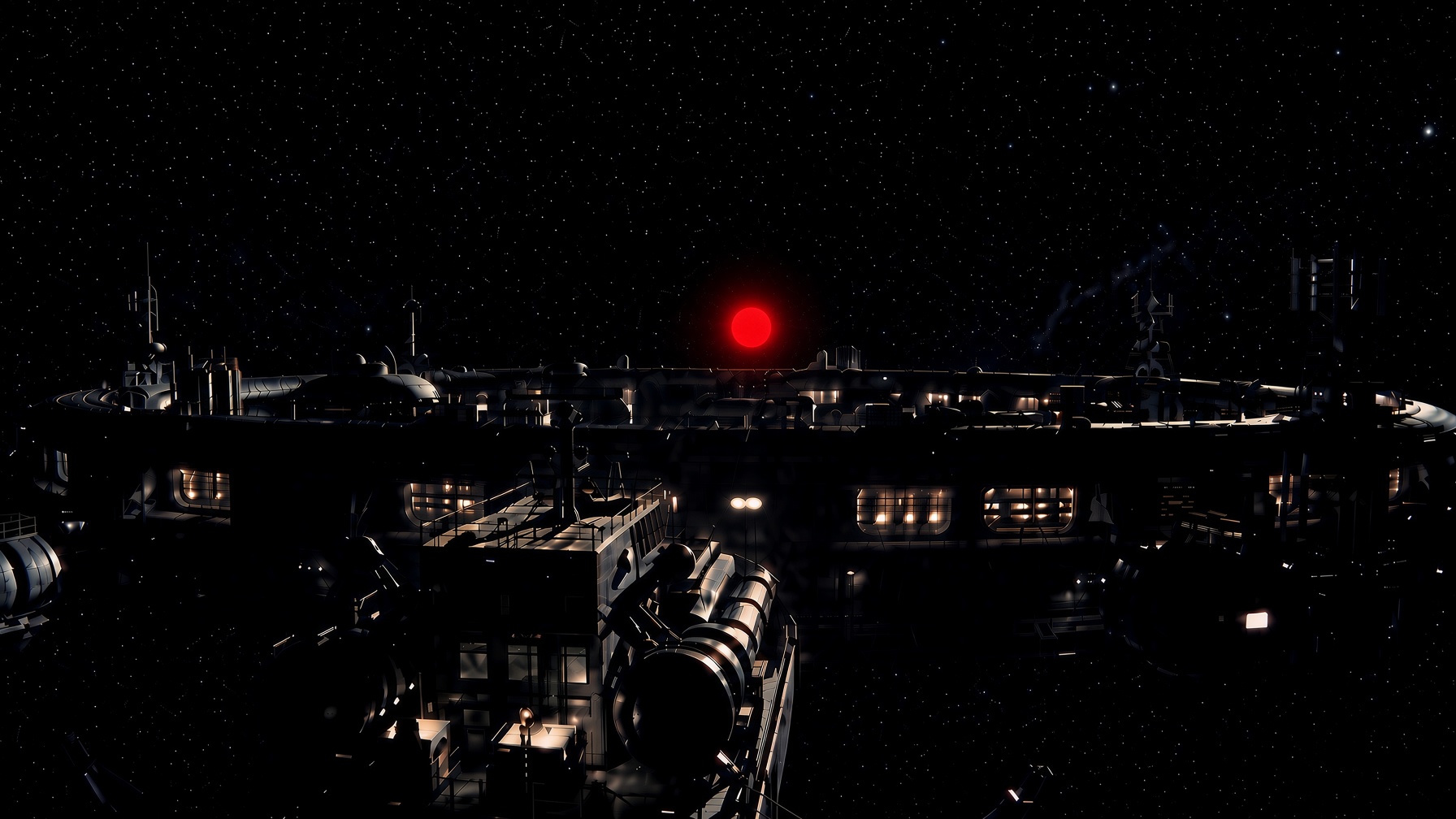
A chain of fifty permanent stations spaced a few light-weeks apart would turn the 4.25-light-year trip to Proxima Centauri into a maintained corridor rather than a centuries-long one-shot voyage. Short-haul ferries would hop between neighboring stations in about five years at 0.017c, rotating crews, handing off cargo, and keeping failures local. The network could develop from robotic beacons to habitats, allowing for staged construction and amortizing costs through reuse. Hard problems remain—power, propulsion, dust, autonomy, and generational institutions—but the same model could later extend to other nearby stars.
A one-shot voyage to Proxima Centauri—4.25 light-years, about 40 trillion kilometers—would last centuries and demand a single craft that never fails. This article instead treats the gap as a transportation corridor: fifty permanent stations spaced a few light-weeks apart, linked by short-haul ferries, so end-to-end travel still takes about 250 years but no ship or crew must endure the whole span.
Stations would sit roughly 0.085 light-years (5,370 AU) apart, forming 51 nodes from a Solar System hub to a Proxima terminal. At about 0.017c, each hop takes roughly five years; light takes only 31 days between neighbors, enough for practical coordination. Ferries fly only adjacent legs, carry fuel and life support for a few years, and hand off cargo and passengers at each stop. Crews rotate after one or two hops; failures stay local; stations store reaction mass, repair vessels, host research, and become self-governing communities.
Segmenting the journey cuts what each ship must carry, enables scheduled repairs, refueling, and crew rotation, and lets the network grow stage by stage instead of betting on one generation ship. Reusable docks, depots, colonies, and vehicles amortize costs. Early robotic beacons and science outposts can bootstrap the chain before habitats and crewed traffic follow.
Hard problems remain: power and station-keeping in interstellar space, propulsion (nuclear or beamed energy rather than chemical rockets), dust affects at thousands of kilometers per second, autonomy under long light delays, and institutional continuity over generations. Later articles will cover kinematics, station and ferry design, propulsion, dust shielding, the robotic bootstrap, and operations. Once built, the same corridor model could extend to other nearby stars, turning the nearest star from a heroic leap into a maintained highway.