On July 20, 1969, humanity took its first steps onto another world. Neil Armstrong’s bootprint in the lunar regolith marked not just a technological triumph, but the moment our species became multi-planetary in practice.
“That’s one small step for [a] man, one giant leap for mankind.”
Those words, spoken from 238,000 miles away, still resonate. Armstrong and Buzz Aldrin spent about two and a half hours on the surface, collecting 47.5 pounds of samples, deploying experiments, and planting the American flag while Michael Collins kept the command module Columbia in lunar orbit. The entire mission was a masterpiece of engineering, orbital mechanics, and raw human courage under extreme constraints.
Why Apollo 11 Still Matters in 2026
The Saturn V rocket, the Lunar Module’s descent stage, the guidance computers with less power than a modern pocket calculator — these were built with 1960s technology, yet they achieved what many thought impossible. The mission validated fundamental principles we still rely on today:
- Precise orbital rendezvous and docking
- Lunar gravity models and trajectory planning
- Radiation protection and life support for deep-space operations
- Human factors in vacuum and low-gravity environments
As someone who has spent years modeling lunar orbits, three-body dynamics, and regolith interactions for both engineering and storytelling, I remain in awe of how Apollo 11 turned theoretical astrodynamics into reality. The data from that mission (and its successors) continues to inform everything from Artemis planning to my own hard sci-fi narratives.
From Tranquility Base to the Fabulae Lunae
In my Fabulae Lunae series — particularly Mask of the Joyful Moon and the stories unfolding at Lunadyne Outpost — I deliberately ground the fiction in the same lunar realities the Apollo astronauts faced: abrasive regolith, extreme thermal swings, communication delays, and the unforgiving vacuum. Nils Carmike, Gen Miller, and the rest of the cast don’t have magic solutions; they wrestle with the same orbital mechanics, resource constraints, and engineering challenges that Apollo pioneered.
Today’s anniversary is a reminder that the Moon is not just a destination in stories — it’s a real frontier waiting for the next generation of explorers, scientists, and settlers. The lessons of Apollo 11 are alive in every simulation I run, every chapter I write, and every discussion we have in the X Spaces and The Outpost community.
Looking Forward
As Artemis moves forward and private ventures target lunar resources and permanent habitats, we stand on the shoulders of giants. The bootprint is still there — preserved in the airless environment for millions of years — a silent testament to what’s possible when vision, rigor, and bravery align.
If you’re new to the series, Mask of the Joyful Moon is available now on Amason. Dive into the corporate intrigue, survival challenges, and hard-science lunar adventure that Apollo helped make imaginable.
What’s your favorite Apollo memory or moment? Drop it in the comments, or join the next Weekly Moon Dispatch discussion on X. Let’s keep the spirit of exploration alive — on the page and beyond the atmosphere.
— Torn MacAlester Belgrade, Montana July 20, 2026
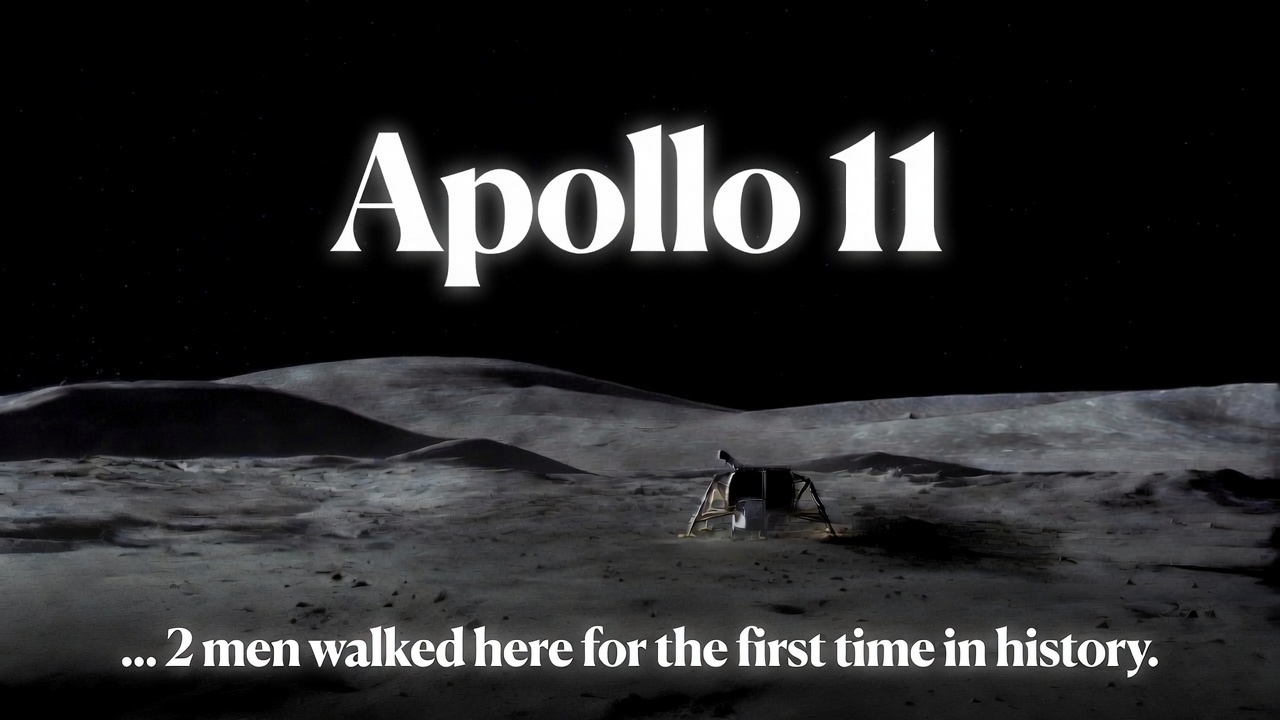
I asked Grok Imagine to generate an image of the Apollo 11 landing site as it might look today. Only the descent stage of the lunar module remains. While many expect the Stars and Stripes to still be standing, video from the ascent stage liftoff reveals the blast of the engine exhaust knocked the flag over. All that remains is my imaginative reconstruction of what the site looks like from the surface. One day we’ll see it from the surface, or from a closer flyover than that provided by LRO imagery from above. Until then, I offer what Grok Imagine and I could come up with.
Stories
The stories of Torn MacAlester are science fiction, where the science is well-grounded. I intentionally made any deviations for speculative purposes. To maintain maximum realism, I restrict the scope of these deviations.
Articles
I write articles of science fact and science fiction. The articles here span the knowledge of modern science and the speculations of fiction. I try to caveat everything that is an assumption. You will find articles about spaceflight, the possibilities of alien contact, and descriptions of technology used in my stories.
Outpost
Blog, Reviews, Schedule, Comment Thread, & Reader’s Group.
Read More